Find Ammo in Stock Right Now – Real-Time Updates on Available Bullets
In stock ammunition refers to factory-loaded cartridges or shells that are physically present in a retailer’s inventory, ready for immediate purchase and transfer upon completion of a lawful sale. Because these rounds have already been assembled with a primer, propellant, and projectile inside a fixed case, they function reliably under controlled pressure specifications and provide consistent ballistic performance straight from the box. The primary value of buying in stock ammunition is that it eliminates waiting periods or backorder delays, allowing you to confirm a specific lot number and inspect the packaging before committing, which supports immediate range sessions, defensive preparedness, or hunting plans. To use it effectively, simply verify that the cartridge designation matches your firearm’s chamber markings, store the boxes in a cool, dry location, and load the rounds directly into magazines or cylinders as needed.
What Does “In Stock” Actually Mean for Your Next Range Trip?
Seeing “in stock” on ammunition means the retailer physically possesses those rounds, ready to ship or pickup—not a backorder promise. For your next range trip, this translates to guaranteed availability: you can plan your session without the anxiety of last-minute caliber shortages. In stock ammunition ensures your specific grain weight and load type are on hand, so your zero and recoil expectations stay consistent from the box to the bench. It also means you can buy now and shoot this weekend, bypassing weeks-long wait times that sabotage training schedules. When a listing shows “in stock,” trust it as a direct signal to secure your supply immediately—because that status can flip by the hour. Your range day deserves certainty, not speculation, and stock confirmation delivers exactly that.
How Ready-to-Ship Inventory Differs From Backorder and Pre-Order
Ready-to-ship inventory means the ammo is physically on a shelf, boxed, and can be dropped at the carrier’s door within a day or two—your card gets charged, and the tracking number appears fast. Backorder sits in a limbo where the website accepts your money but has zero confirmed product, so you’re waiting on a manufacturer shipment that might shift weekly. Pre-order is closer to a reservation for a future 5.7x28mm Ammo for Sale production batch, often before the round even exists, so your range trip depends on a release date that can slip. Ready-to-ship inventory is the only option where “in stock” guarantees movement. For a trip this weekend, check the order status; backorder and pre-order lack that concrete trigger.
- Look for “ships today” or “in warehouse” wording—this signals ready-to-ship.
- Backorder shows a stock count but often lists “ETA” from the distributor, not a physical unit.
- Pre-order has no stock number at all—just a future commitment and a release window.
If you see a “lead time” longer than 72 hours, you’re likely dealing with backorder or pre-order, not ready-to-ship, no matter what the add-to-cart button implies.
Why Confirmed Availability Matters for Time-Sensitive Shooting Plans
When your range day hinges on a specific caliber, a vague website status is a liability. Confirmed availability for time-sensitive shooting plans means the ammo is physically boxed, labeled, and ready to ship the moment you commit, eliminating the risk of specialty sports & supply a canceled order that derails your preparation. A “backorder” notice or a third-party marketplace listing can waste a week of lead time, forcing you to scramble for substitutes or reschedule your session. Confirmed stock lets you lock in your logistics, verify your load, and focus on drills instead of inventory anxiety. It transforms a hopeful click into a guaranteed component of your trip, ensuring your preparation matches your intention.
Confirmed availability protects your schedule, ensuring your ammunition plan is as solid as your shooting plan.
Matching the Right Ready-to-Ship Load to Your Firearm’s Specs
Matching the right ready-to-ship load to your firearm’s specs begins by verifying the barrel’s rifling twist rate against the projectile weight listed on the in-stock ammunition box—a 1:7 twist handles 62–77 grain bullets, while a 1:12 twist prefers 55 grain or lighter. Confirm the cartridge’s overall length and pressure rating align with your chamber’s stated trim length, especially for AR-platform rifles where magazine-fed OAL must not exceed 2.260 inches. Check the bullet’s construction (hollow point vs. full metal jacket) against your firearm’s feed ramp angle to avoid jams. Cross-reference the muzzle velocity from the lot number on the in-stock shelf with your gas system’s port size; underpowered loads can short-stroke.
Always match the bullet’s ballistic coefficient to your barrel’s intended twist rate before buying in-stock rounds, as mismatched specs degrade accuracy faster than any external factor.
Write down your barrel’s exact groove diameter and compare it to the bullet’s nominal diameter printed on the case sticker—a 0.0002-inch variance explains pressure spikes.

Reading Bullet Grain and Velocity Numbers on the Box
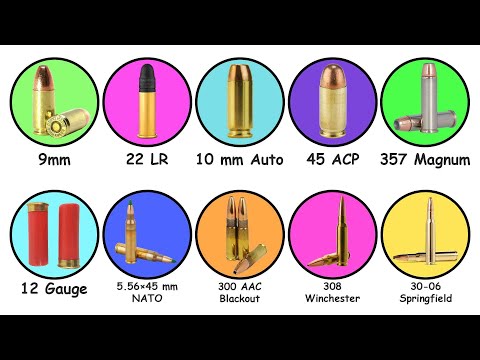
When evaluating in stock ammunition, the bullet grain and velocity figures printed on the box are your primary comparative tools. A heavier grain (e.g., 147gr vs 115gr) will typically produce lower muzzle velocity but deeper penetration, while a lighter grain often yields flatter trajectories and reduced recoil. Cross-reference the listed feet-per-second (fps) against your firearm’s barrel length, as shorter barrels will drop that number in practice. *The printed velocity is measured from a test barrel, so your actual performance will vary slightly.* Match the grain to your twist rate and intended use, choosing a slower, heavier load for suppressed or short-barreled setups, and a faster, lighter round for competition or varmint work.
Identifying the Correct Caliber and Casing Type Before You Click Buy
Before adding any in-stock ammunition to your cart, verify the caliber designation stamped on your firearm’s barrel or slide, then cross-check it against the product listing—a simple typo like .38 vs. .357 can render a purchase useless. Next, confirm the casing type: brass, steel, aluminum, or nickel-plated, as your firearm’s extractor and chamber tolerances may favor one over another. For example, steel-cased rounds often have a polymer coating that can affect feeding in tight match chambers, while brass offers reliable extraction for semi-automatics. Always match the exact cartridge name (e.g., 9mm Luger vs. 9mm Makarov) and case length, since casing type directly impacts chamber pressure and function. Ignoring these specs wastes money and risks malfunctions.
Confirm the exact caliber stamp and casing material before checkout; mismatched specs cause feed failures and unsafe pressure.
How Bullet Tip Shape Affects Accuracy and Stopping Power

When you’re grabbing ready-to-ship ammo for your rifle’s 7.62×39 Ammo for Sale specs, the tip shape is the first thing that changes how it prints on paper and hits a target. A sharp, pointed tip—like a boat-tail spitzer—cuts through wind better, keeping your group tight at longer ranges because it keeps velocity up. A flat or rounded tip, though, pushes more air and slows down quicker, so it loses accuracy past 200 yards. But that same flat nose dumps energy fast on impact, giving you harder-hitting stopping power for close-range hunting or defense. A hollow point opens up quickly in soft tissue, creating a wider wound channel, while a full metal jacket stays intact, penetrating deeper without as much immediate stopping force.
- Pointed tips maintain flatter trajectories for long-distance precision.
- Flat or wide tips transfer more energy on impact for stopping power.
- Hollow points expand on contact; solid tips retain shape for deeper penetration.
Key Features That Make Currently Available Cartridges Perform Better
Walking into the shop, the boxes on the shelf promise more than just brass and lead. The real edge comes from **precision-tuned projectiles**, like polymer-tipped boat tails that keep their trajectory flat even when a cold wind cuts across the range. Modern propellants burn cleaner and more consistently, so your last round from a half-empty box hits the same zero as the first, which matters when you’re holding on a buck at dusk. Case necks are annealed and flash holes uniformed, cutting down on velocity spread, and sealed primers keep moisture from degrading a round that’s sat in your truck for months. Why does this matter for in-stock ammo? Because the factory load you grab off the rack today is engineered for real-world consistency, not just paper numbers—so your groups stay tight without handloading.
Clean-Burning Powder Formulas That Reduce Barrel Fouling
Modern in-stock ammunition increasingly utilizes advanced propellant blends that combust more completely, leaving significantly less carbon residue and copper buildup in the bore. These low-fouling powder formulations burn at optimized temperatures and pressures, which .17 HMR Ammo for Sale prevents the sticky, baked-on deposits that degrade accuracy over a long range session. By reducing the frequency of solvent-soaking and brushing, shooters maintain consistent velocities and tighter shot groups for more rounds without cleaning. This cleaner burn also minimizes corrosive byproducts that attract moisture, protecting the rifling’s integrity. For precision-oriented shooters, choosing these powders means less downtime and predictable point-of-impact shift, especially during extended practice or competition.
Clean-burning powders in stock ammunition cut barrel fouling, preserving bore condition and shot-to-shot consistency for longer periods between cleanings.
Primer and Casing Quality That Ensures Reliable Ignition
In-stock ammunition’s ignition reliability hinges on a primer that seats flush within a precisely sized primer pocket, preventing high-pressure gas from escaping rearward and causing misfires. Casing quality matters equally: consistent case-wall thickness and proper headspace ensure the primer anvil contacts the firing pin with uniform force, while annealed necks and sturdy case heads resist deformation during repeated chambering. A hard, corrosion-resistant primer compound, paired with a sealed primer and crimped casing, guards against moisture ingress that degrades ignition over long storage. Consistent primer seating depth in quality casings directly reduces light-strike failures.
- Flush .17 WSM Ammo for Sale primer seating eliminates erratic ignition from protruding or recessed primers.
- Uniform case-head hardness prevents soft primers from dimpling under firing pin pressure.
- Sealed primer pockets and case primers block moisture that slows ignition timing.
Waterproof and Corrosion-Resistant Sealants for Long-Term Storage
For long-term storage, waterproof and corrosion-resistant sealants transform standard in-stock ammunition into a dependable reserve. These polymer-based primers and case-neck lacquers create a physical barrier that blocks moisture vapor, salt air, and humidity from reaching the primer compound and propellant. A quality sealant flexes with temperature swings without cracking, ensuring the round remains airtight for decades. When applying, first ensure cases are clean and dry, then apply a thin, even coat to the primer pocket Ammo Cans & Storage for Sale and case mouth, and finally allow full cure before boxing. This proactive layer prevents rust rings, misfires, and degraded ballistics, so your stored rounds perform identically to the day they left the factory.

Practical Tips for Buying Available Rounds Without Overpaying
When you 5.56 Ammo for Sale spot in stock ammunition, resist the first price you see—check three or four online retailers and filter by price-per-round, not the box total, since bulk packs often hide higher unit costs. Stick to reputable sellers with flat-rate shipping, and add a few boxes to a single order to dilute that fee; otherwise, a “deal” evaporates. Watch for inflated “panic” pricing by comparing against a baseline like a major sporting goods chain’s standard rate, and skip “exclusive” or “premium” loads unless your firearm truly needs them. Quick Q&A: How do you avoid overpaying on in stock ammo? Calculate cost per round including shipping, then set a max threshold—say 10% above average—and walk away if it exceeds that. Buy only what you’ll use soon, as hoarding encourages sellers to keep prices high.
Calculating True Cost Per Round With Shipping and Tax Included
The sticker price on in-stock ammunition is rarely what you actually pay, so calculating true cost per round with shipping and tax included is the only way to compare deals fairly. Start by adding the exact shipping fee and your state’s sales tax to the cart total, then divide that sum by the number of boxes times the rounds per box. A $14 box of 50 rounds becomes $0.31 per round after $8 shipping and 8% tax, while a $16 box with free shipping and no tax drops to $0.32—make the math your referee. Ignore per-box savings and always normalize to a single round figure before clicking buy.
Always compute (ammo price + shipping + tax) ÷ total rounds to reveal the true per-round cost; the lowest advertised price is meaningless without this step.
How to Spot Bulk Packaging Deals Versus Discounted Boxes
When scanning shelves for in stock ammunition, the real trick is comparing price per round, not the sticker on the box. A “bulk pack” of 500 often hides a higher per-round cost than a 20-count “discounted” box, especially if the bulk option uses premium projectiles. Grab your phone and divide the total by the cartridge count; if the bulk deal isn’t at least 5–10% cheaper, it’s just a larger package, not a better value. Also, check the seal—bulk ammo often comes in loose, non-reloadable trays, while discounted boxes might be factory-sealed with matching lot numbers. That lot number matters for consistency. Finally, watch for “value packs” that simply bundle older stock; if the primer looks tarnished or the brass is dull, that discount 7.62×51 Ammo for Sale is a gamble. Spotting true bulk packaging deals means trusting math over marketing and inspecting the physical rounds before you commit.
Choosing Between Full-Power, Mid-Range, and Reduced-Recoil Loads
When buying in stock ammunition, choosing between full-power, mid-range, and reduced-recoil loads hinges on your firearm’s purpose and your tolerance for felt recoil. Full-power loads maximize terminal performance and cycling reliability in semi-autos, but they increase muzzle rise and shooter fatigue, especially 7.62x54R Ammo for Sale during extended practice. Mid-range loads offer a practical balance for training and target work, preserving function without over-stressing components or your wrists. Reduced-recoil loads prioritize control and follow-up shot speed, ideal for new shooters or those with light-framed pistols, yet they may fail to cycle stiff springs. To avoid overpaying, match the load to a specific task rather than buying a single type for all uses. A logical sequence:
- Identify your primary use—defense, practice, or competition.
- Test one box of each load class to verify reliable feeding and ejection.
- Commit to the lightest load that cycles your gun flawlessly, saving money on shot-to-shot accuracy.
Ultimately, the cheapest round is worthless if it causes flinching or malfunctions, so prioritize recoil-to-reliability matching when selecting from available stock.
Storage and Handling Advice for Your Purchased Supply
To protect your investment, store ammunition in a cool, dry place—ideally below 75°F with low humidity. Avoid basements or attics where temperature swings 7mm PRC Ammo for Sale cause condensation, which can corrode brass and degrade primers. Keep rounds in their original factory boxes or a sealed ammo can with a desiccant pack, as this maintains consistent pressure and reliable ignition. When handling your supply, always inspect for dented cases, loose bullets, or green corrosion before loading; discard damaged rounds responsibly. Rotate your stock using a “first in, first out” system so older ammunition gets used first. Finally, never lubricate cartridges, as oil seeps into primers and renders them inert. A simple, organized routine preserves performance for years.
Keeping Ready-to-Use Rounds Safe From Heat, Humidity, and Impact
For any in stock ammunition you plan to use soon, keep ready rounds in a sealed, airtight can with a desiccant pack, because humidity—not just rain—degrades primers and powder. Store them away from direct sunlight, attic heat, or car trunks, since temperatures above 120°F can alter ballistic performance. Handle each box deliberately; a hard drop or strike to the casing can deform the projectile and compromise chambering. Even a seemingly minor impact on the primer cup can mute ignition, so treat every round like a precision tool, not a loose coin.
- Rotate your ready-use stash every three months to keep fresh primers and powder in action.
- Use a silica gel canister in the ammo can and check it monthly for color change.
- Never store rounds loose in a range bag pocket where keys or mags can slam against them.
- Set your storage spot at a stable 60–75°F, away from furnace vents or water pipes.
Rotating Your Stockpile to Preserve Freshness and Performance
Rotating your stockpile is the single most effective way to ensure every round you fire performs as reliably as the day it left the factory. Adopt a strict oldest-in, oldest-out system, placing newly purchased boxes behind your existing inventory. Always inspect for corrosion or loose primers before adding new ammo to the mix. Even sealed cartridges degrade slowly through temperature swings, so rotation prevents the subtle loss of velocity and primer sensitivity that only becomes obvious at the range. Follow this simple sequence: label every box with its purchase date, sort by caliber and lot number, then always pull from the front and restock from the rear. Finally, set a quarterly reminder to physically shuffle your containers, breaking up any settled powder and confirming that no box has been forgotten.
Safe Ammunition Disposal Practices for Damaged or Dented Rounds
Damaged or dented rounds from your in-stock supply are unpredictable and must never be fired. Immediately isolate any suspect cartridge from your viable stock, placing it in a padded, non-conductive container away from heat and impact sources. Do not attempt to reshape, pry, or disassemble the round, as this creates severe risk. The only safe ammunition disposal method is to transport the damaged round directly to a licensed dealer, range, or law enforcement facility equipped for hazardous ordnance collection; never place it in household trash or recycling. Submerge the round in a small, clearly labeled oil-filled container to neutralize potential primer sensitivity during transit, and keep it separated from live ammunition to prevent confusion.
- Tag the damaged round with a written warning before transport.
- Use a rigid, padded box for the oil-filled container.
- Notify the receiving facility in advance about the dented round.
- Never store damaged rounds with your primary in-stock supply.